
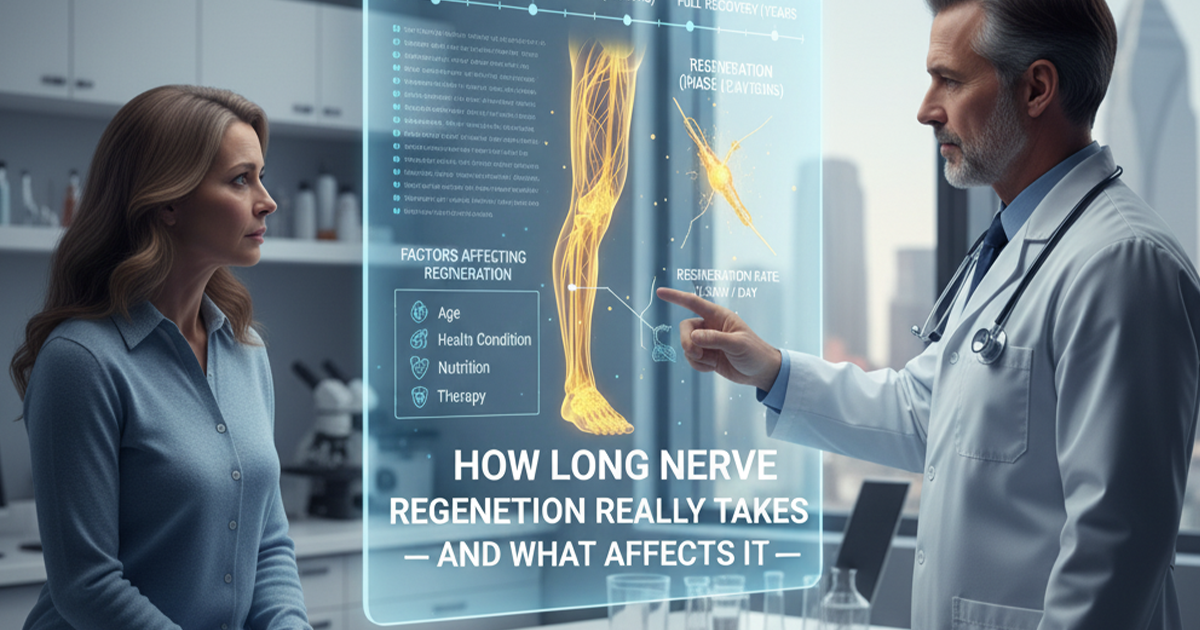
Why Nerve Regeneration Takes Time
Nerve repair is a gradual process that requires energy, oxygen, and patience. Unlike muscles or skin, nerves regenerate slowly because they must rebuild their protective coating (myelin sheath) and reestablish signal pathways between the brain and body.
At Premier Health Institute Los Angeles, we help patients understand that nerve healing isn’t instant—but with consistent oxygen, circulation, and red-light therapy, results can begin much faster than most expect.
The Average Timeline for Nerve Regeneration
In general, peripheral nerves regenerate at a rate of approximately 1 millimeter per day, or about one inch per month, depending on severity and overall health. However, with enhanced oxygenation and improved circulation, regeneration can accelerate substantially.
Our patients typically begin noticing improvement in stages:
- Weeks 1–4: Increased warmth, reduced tingling, and improved sleep.
- Weeks 5–8: Return of partial sensation, balance, and strength.
- Weeks 9–12: Noticeable reduction in burning pain and numbness.
- Months 4–6: Stable nerve function with restored comfort and mobility.
Every patient’s journey is unique, but consistent therapy and healthy habits dramatically improve outcomes.
What Factors Influence Healing Speed
Several factors determine how quickly nerves regenerate:
1. Oxygen Delivery
Nerves rely on oxygen for cellular energy. Low oxygen levels slow repair, while oxygen therapy accelerates ATP production and healing.
2. Circulation Quality
Poor circulation starves the nerves of nutrients. Treatments that reopen microcapillaries help nerves repair more efficiently.
3. Inflammation Levels
Chronic inflammation keeps the body in “fight-or-flight” mode, preventing nerve repair. Vagus nerve activation helps reset the system and promote healing.
4. Mitochondrial Energy
Mitochondria fuel nerve growth. Red-light therapy stimulates mitochondrial activity, enhancing regeneration.
5. Blood Sugar Control
For diabetic patients, uncontrolled blood sugar damages small vessels, making nerve repair slower. Stabilizing glucose supports lasting recovery.
6. Age and Overall Health
Younger, active patients may heal faster, but older adults see excellent progress when therapies are combined consistently.
Patient Story: Realistic Progress and Long-Term Success
A 66-year-old Los Angeles patient came to our clinic with advanced neuropathy and complete numbness in both feet. After three months of oxygen and circulation therapy, she began feeling warmth and touch again. By month six, she could walk without stumbling.
She said, “It took time, but every month I got a little better. Now I can feel my steps and my confidence is back.”
How We Accelerate the Healing Process
Our program at Premier Health Institute Los Angeles shortens typical regeneration timelines by combining:
- Oxygen Therapy: Restores oxygen flow to the smallest nerve endings.
- Circulation & Balance Therapy: Increases capillary expansion and nutrient exchange.
- Red-Light Therapy: Stimulates ATP production and cellular regeneration.
- Vagus Nerve Activation: Reduces inflammation and optimizes nervous system balance.
- Lifestyle Coaching: Supports the body’s ability to heal between sessions.
By improving the biological environment where nerves repair, we help patients recover in weeks instead of years.
What You Can Do to Support Nerve Regeneration
Simple, consistent habits can significantly boost results:
- Move daily: Walking or gentle stretching enhances circulation.
- Hydrate often: Keeps blood flow strong and oxygen transport efficient.
- Eat nutrient-rich foods: B vitamins, magnesium, and omega-3s promote nerve health.
- Practice stress reduction: Deep breathing and meditation calm inflammation.
- Avoid alcohol and smoking: Both restrict blood flow and slow regeneration.
Frequently Asked Questions
Can nerve regeneration be permanent?
Yes. Once nerves heal and oxygen supply is restored, most improvements are long-lasting.
How soon will I start noticing changes?
Many patients begin noticing subtle changes—like warmth or tingling—within the first 3–4 weeks of therapy.
Is faster healing possible?
Absolutely. Combined therapies and healthy habits can double the rate of nerve recovery in many patients.
The Takeaway
Nerve regeneration takes time, but it does happen—especially when the body receives the oxygen, circulation, and energy it needs to heal.
At Premier Health Institute Los Angeles, we help patients accelerate that process with proven, non-invasive therapies designed to reawaken the body’s natural repair mechanisms.
Healing nerves isn’t a matter of luck—it’s a matter of biology, consistency, and care.