
Why Early Detection Matters
Neuropathy doesn’t happen overnight—it develops gradually as oxygen and nutrient delivery to your nerves decline. By the time pain or numbness becomes severe, nerve fibers have already suffered significant damage.
At Premier Health Institute Los Angeles, we teach patients that the earliest signs of neuropathy are your body’s warning system. Recognizing and addressing these symptoms early is the key to preventing permanent nerve loss and restoring normal function naturally.
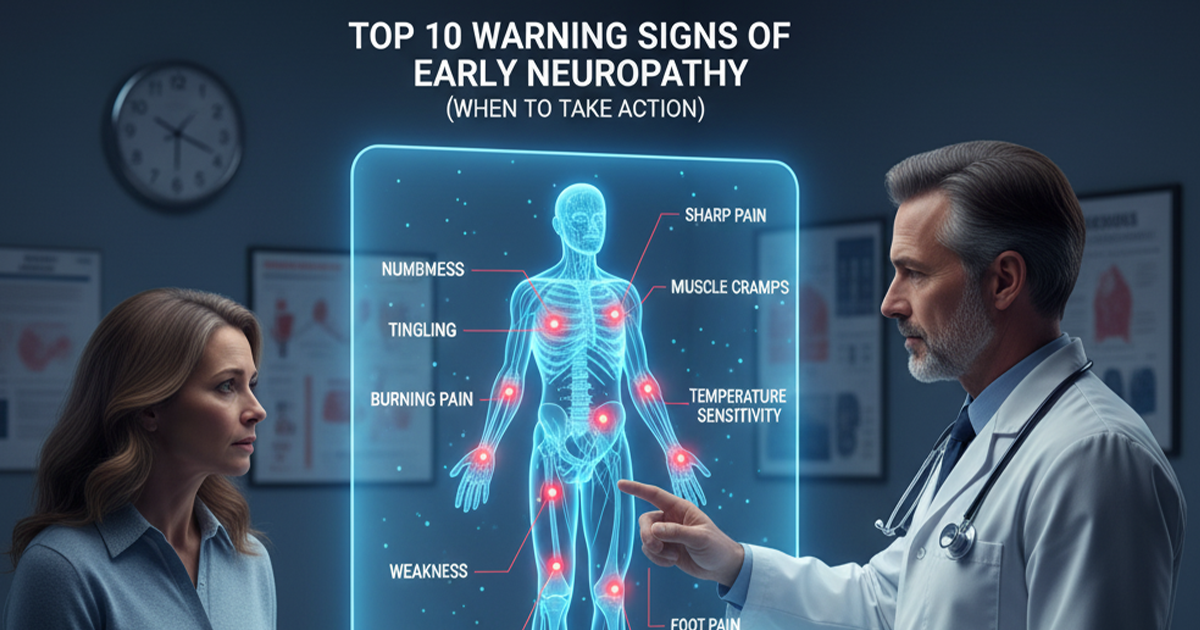
The Top 10 Early Warning Signs of Neuropathy
1. Tingling or “Pins and Needles” Sensations
This is often the first symptom patients notice. It usually starts in the toes or fingertips and can feel like light static electricity. It means nerve signals are misfiring due to oxygen deprivation.
2. Numbness or Reduced Sensation
Losing the ability to feel temperature, touch, or pain is a major red flag. Numbness happens when nerve cells can’t transmit information properly. If ignored, it can progress to total sensory loss.
3. Burning or Sharp Pain
When nerves are inflamed or dying, they can send false pain signals. This burning discomfort—especially at night—is one of the most common symptoms of progressing neuropathy.
4. Cold or Discolored Extremities
Poor circulation leads to oxygen loss, which makes feet and hands feel cold, pale, or bluish. This sign often appears before numbness develops.
5. Balance Problems or Unsteady Walking
Nerves in your feet send messages to your brain that help you stay upright. When they fail, balance becomes difficult—especially in the dark or on uneven ground.
6. Muscle Weakness or Cramping
Motor nerves control muscle contractions. When they’re damaged, weakness, twitching, or sudden cramps may occur in the legs, calves, or hands.
7. Sensitivity to Touch or Temperature
Even light contact can become uncomfortable, or you may find that heat and cold feel exaggerated. These hypersensitive responses signal nerve inflammation.
8. Slow Healing of Cuts or Wounds
When blood flow is restricted, wounds on the feet and legs take longer to close. This combination of poor circulation and nerve damage increases the risk of infection.
9. Restless Legs or Tingling at Night
Many patients describe sensations that worsen in bed—tingling, crawling, or burning that keeps them awake. These signs suggest circulation slows even more during rest, leaving nerves oxygen-starved.
10. Fatigue and Brain Fog
Chronic nerve dysfunction doesn’t just affect your limbs—it drains your energy and mental clarity. When nerves are constantly under stress, your body uses extra energy to manage the pain signals.
When to Take Action
If you experience two or more of these symptoms consistently, it’s time to act. Nerve damage can often be reversed if oxygen and circulation are restored early—but if you wait too long, the nerves may die permanently.
The earlier you intervene, the faster and more complete your recovery will be.
Patient Story: Catching Neuropathy Before It Spread
A 55-year-old Los Angeles patient came to us after noticing mild tingling in his toes. Within three weeks of starting oxygen and circulation therapy, his symptoms disappeared completely.
He said, “I’m glad I didn’t wait. It’s scary to think how bad it could have gotten.”
His quick action prevented long-term nerve loss—a perfect example of why early detection matters.
How Premier Health Institute Treats Early Neuropathy
Our early intervention program combines the most effective non-invasive therapies to restore nerve health naturally:
- Oxygen Therapy to restore oxygen supply to damaged nerves.
- Circulation Therapy to reopen blocked microcapillaries.
- Red-Light Therapy to activate mitochondria and accelerate nerve repair.
- Vagus Nerve Activation to calm inflammation and rebalance the nervous system.
- Lifestyle Coaching to address contributing factors like diet, stress, and sleep.
By combining these therapies, we help patients stop neuropathy at its source—before it causes irreversible damage.
How to Protect Your Nerves at Home
- Stay active with light daily walking or stretching.
- Keep blood sugar stable through balanced meals.
- Avoid alcohol, smoking, and processed foods.
- Stay hydrated to support circulation.
- Sleep 7–9 hours nightly for nerve regeneration.
- Inspect your feet daily for redness, cuts, or coldness.
These habits complement our in-office treatments and help maintain long-term nerve health.
Frequently Asked Questions
Can early neuropathy be reversed completely?
Yes. When detected early and treated properly, nerve function can often return to normal.
Is tingling always a sign of neuropathy?
Not always, but persistent tingling or numbness should never be ignored—it often signals reduced oxygen or blood flow to the nerves.
How soon should I seek help after noticing symptoms?
Immediately. Early therapy greatly improves your chances of full recovery.
The Takeaway
Early neuropathy symptoms are your body’s way of asking for help. Tingling, numbness, and poor circulation are not minor annoyances—they’re warnings that oxygen and nutrient delivery to your nerves is declining.
At Premier Health Institute Los Angeles, we specialize in catching neuropathy early, restoring oxygen, improving circulation, and giving patients the best chance at a full, natural recovery.