
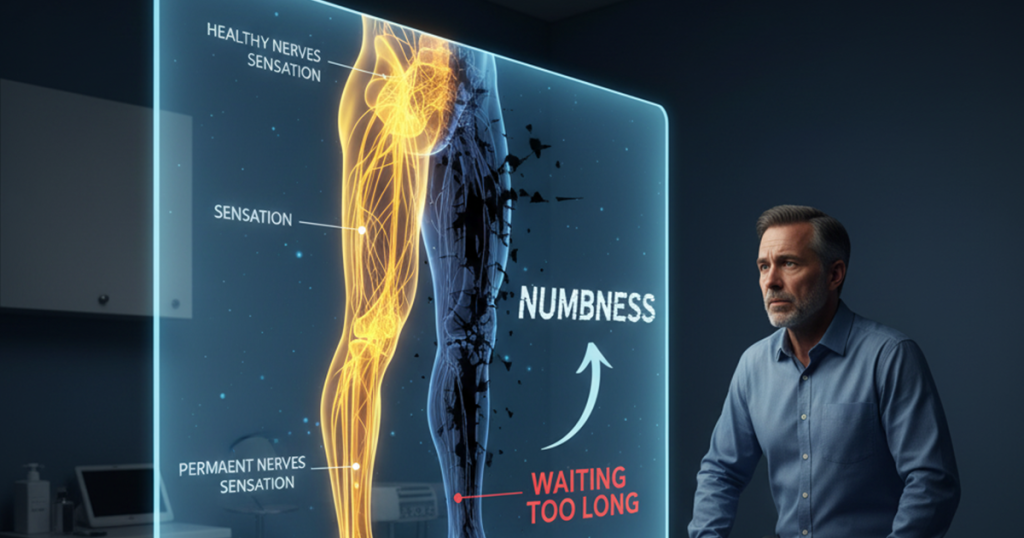
Why Numbness Is a Serious Warning Sign
Numbness might seem harmless at first. Maybe your feet feel a little “asleep,” or your fingers lose sensation after sitting too long. But if numbness keeps returning or lingers for days or weeks, it’s a red flag that your nerves are losing oxygen and beginning to shut down.
At Premier Health Institute Los Angeles, we help patients recognize that numbness is not a minor inconvenience—it’s an early sign of oxygen deprivation in the nerves. The sooner it’s treated, the higher the chance of full recovery. Waiting too long, however, can cause permanent nerve loss.
What Causes Numbness in the Hands and Feet
Numbness occurs when nerves lose their ability to send signals properly. This typically happens because of:
- Poor circulation — oxygen can’t reach the smallest nerve endings.
- High blood sugar or diabetes — damages the tiny vessels feeding the nerves.
- Chronic inflammation — compresses and irritates nerve tissue.
- Toxin buildup or oxidative stress — slows cellular energy production.
- Vitamin deficiencies — especially B12 and magnesium.
- Injury or repetitive strain — physically damages nerve pathways.
Most of these causes have one thing in common: oxygen deprivation. Without oxygen, nerves weaken, shrink, and eventually die.
The Stages of Nerve Decline
Nerve damage doesn’t happen all at once—it progresses in stages:
Stage 1: Tingling and “Pins and Needles”
This is your nerves’ first cry for help. Signals are slowing down but still active.
Stage 2: Numbness and Reduced Sensation
Oxygen levels drop further. The nerves can’t send accurate signals, and areas of your body begin to “go silent.”
Stage 3: Pain and Burning
As nerves misfire and become inflamed, they send random pain signals even when there’s no injury.
Stage 4: Muscle Weakness and Balance Loss
Damaged nerves can’t control muscle coordination, leading to instability and fatigue.
Stage 5: Permanent Nerve Loss
If oxygen isn’t restored, nerve fibers begin to die. At this stage, reversal becomes much more difficult.
Our goal is to intervene during the first three stages—when recovery is still completely possible.
Patient Story: Regaining Sensation Just in Time
A 65-year-old Los Angeles patient came to our clinic with severe numbness in both feet. She had been told by her physician that “nothing could be done.” After ten weeks of oxygen, circulation, and red-light therapy, her sensation began returning, and her walking stability improved dramatically.
She said, “I waited too long to get help, but I’m glad I didn’t wait any longer. I can feel my toes again.”
Her story is a reminder that every week matters when it comes to saving nerve function.
Why Early Treatment Works
When oxygen and circulation are restored early, the nerves still have living cells capable of regeneration. Treatments like Oxygen Therapy, Circulation & Balance Therapy, and Red-Light Therapy reawaken these cells by improving blood flow and stimulating mitochondrial energy production.
Once that happens, the nerves can rebuild their myelin sheath and reconnect with the brain—restoring sensation, balance, and strength.
What Happens If You Wait Too Long
Ignoring numbness allows the oxygen-deprived state to continue. Over time, this leads to:
- Permanent sensory loss
- Muscle weakness or atrophy
- Poor coordination and frequent falls
- Ulcers or injuries that go unnoticed
- Chronic pain or burning sensations
- Higher risk of infections or amputations in diabetic patients
By the time numbness becomes constant, a large number of nerve fibers have already died. Restoring them becomes far more challenging.
How Premier Health Institute Restores Nerve Function
Our neuropathy recovery program focuses on reversing numbness through three key mechanisms:
- Increase Oxygen Flow: Oxygen therapy floods the bloodstream, restoring life to oxygen-starved nerve cells.
- Boost Circulation: Circulation therapy reopens microcapillaries, ensuring consistent nutrient delivery.
- Rebuild Cellular Energy: Red-light therapy enhances mitochondrial activity to jumpstart repair.
These treatments are complemented by Vagus Nerve Activation to reduce inflammation and Lifestyle Coaching to prevent recurrence.
Early Signs You Should Never Ignore
If you experience any of the following symptoms for more than a few days, it’s time to act:
- Tingling or numbness in feet or hands
- Burning or freezing sensations
- Loss of balance or coordination
- Pain that worsens at night
- Cold or discolored extremities
These are early indicators of nerve oxygen loss—your body’s alarm bell for action.
Frequently Asked Questions
Can permanent nerve loss be reversed?
In severe cases, full recovery may not be possible, but early intervention can restore partial function and prevent further decline.
How soon should I seek help for numbness?
Immediately. The longer nerves go without oxygen, the lower the chance of complete recovery.
Can oxygen therapy really bring sensation back?
Yes. By improving blood flow and oxygen levels, many patients regain sensation and warmth within weeks.
The Takeaway
Numbness isn’t harmless—it’s a clear sign your nerves are losing oxygen and starting to shut down. The sooner you act, the better your chance of restoring full function.
At Premier Health Institute Los Angeles, we help patients recover sensation and mobility naturally through oxygen-based, circulation-boosting, and nerve-regenerating therapies that reverse damage before it’s too late.