
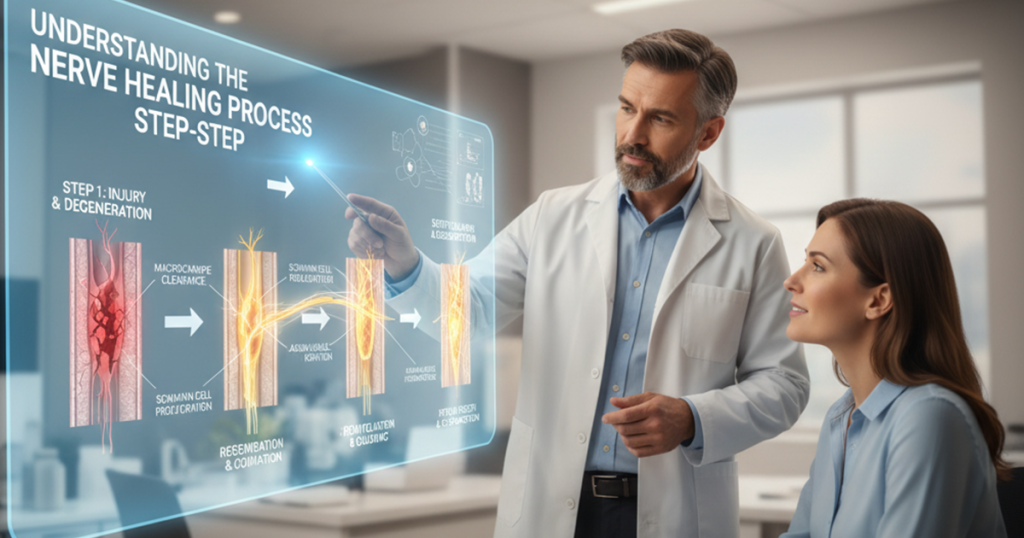
How Nerve Healing Actually Works
When nerves are damaged by diabetes, inflammation, or poor circulation, they don’t simply “fix themselves.” Nerve repair is a highly organized process involving several stages—each requiring oxygen, energy, and consistent circulation.
At Premier Health Institute Los Angeles, our neuropathy recovery program is built to support each phase of this process. By improving oxygen delivery, reducing inflammation, and reactivating cellular energy, we help nerves regenerate faster and more completely.
Step 1: Stopping the Damage
Before healing can begin, the first step is stabilization—stopping the conditions that caused the damage in the first place.
- We restore oxygen and circulation to the nerves.
- Inflammation is reduced through vagus nerve activation.
- Blood sugar and nutrient imbalances are corrected with lifestyle support.
This stage prevents further degeneration and sets the stage for recovery.
Step 2: Clearing Inflammation and Waste
When nerves are deprived of oxygen, waste products like lactic acid and free radicals accumulate in the surrounding tissue. This buildup blocks new growth and increases pain.
Through Circulation Therapy, we help flush out toxins and bring in fresh oxygen and nutrients. Patients often begin noticing improved warmth, reduced swelling, and less pain during this stage.
Step 3: Reactivating Cellular Energy
Healing requires energy—and that energy comes from the mitochondria, the “batteries” inside each cell. Using Red-Light Therapy and Oxygen Therapy, we increase the amount of ATP (adenosine triphosphate) your cells produce.
This burst of energy allows the nerves to start rebuilding their protective coating (myelin) and repair damaged connections between the brain and extremities.
Step 4: Regrowth of Nerve Fibers
Once the environment is stable and energy production has improved, new nerve fibers begin to sprout and reconnect with nearby tissues. This process is known as axonal regeneration.
It’s a slow but powerful phase. Patients often report tingling, warmth, or slight electrical sensations—signs that dormant nerves are waking up and sending signals again.
With consistent therapy, these signals strengthen over time, restoring natural communication between the brain and body.
Step 5: Rebuilding the Myelin Sheath
The myelin sheath is the insulating layer that surrounds nerve fibers. When damaged, it causes signals to misfire, resulting in numbness, tingling, and pain.
Oxygen and red-light therapy stimulate the production of Schwann cells, which are responsible for regenerating myelin. As this coating rebuilds, nerve transmission becomes smooth and reliable again. Patients often notice improved sensation and coordination during this phase.
Step 6: Restoring Function and Balance
The final stage of healing focuses on neuromuscular re-education—training the nerves and muscles to work together again. Our Balance & Coordination Therapy helps patients regain confidence in their movements by reinforcing nerve pathways that control posture, gait, and stability.
This phase completes the cycle of regeneration and ensures that results are long-lasting.
Patient Story: Healing One Stage at a Time
A 63-year-old Los Angeles patient came to our clinic with diabetic neuropathy so advanced she could no longer feel her toes. Over 12 weeks, she moved through each phase of the nerve healing process—first noticing warmth, then tingling, and eventually full sensation.
She said, “It was like watching my nerves come back to life step by step.”
How We Support Each Phase Naturally
At Premier Health Institute Los Angeles, our therapies are synchronized with the body’s natural repair cycle:
- Oxygen Therapy: feeds the cells with oxygen for energy.
- Circulation Therapy: clears inflammation and restores nutrient flow.
- Red-Light Therapy: activates mitochondria and accelerates tissue repair.
- Vagus Nerve Activation: calms inflammation and enhances recovery.
- Balance Training: ensures long-term functional improvement.
By aligning with your body’s own biology, we help nerves heal faster and more completely.
Supporting Nerve Healing at Home
To maintain progress between sessions, patients are encouraged to:
- Stay active with light walking or stretching.
- Eat anti-inflammatory foods and stay hydrated.
- Avoid alcohol, smoking, and processed sugars.
- Prioritize sleep to allow cellular repair overnight.
- Practice deep breathing for better oxygen absorption.
These habits enhance every stage of the healing process and protect nerves long-term.
Frequently Asked Questions
How long does the full healing process take?
It varies by patient, but most notice steady progress over 8–12 weeks, with continued regeneration for several months afterward.
What are signs that nerves are healing?
Tingling, warmth, or returning sensation in the hands and feet are all positive signs of nerve recovery.
Can nerves fully heal once damaged?
Yes. If oxygen and circulation are restored before full degeneration, nerves can regenerate and regain normal function.
The Takeaway
Nerve healing doesn’t happen overnight—it happens step by step, as the body regains oxygen, energy, and communication. When guided by the right therapies, this process can transform pain and numbness into comfort, balance, and strength.
At Premier Health Institute Los Angeles, we help patients move through each stage of nerve recovery naturally—combining science-backed therapies to support true, lasting healing.