
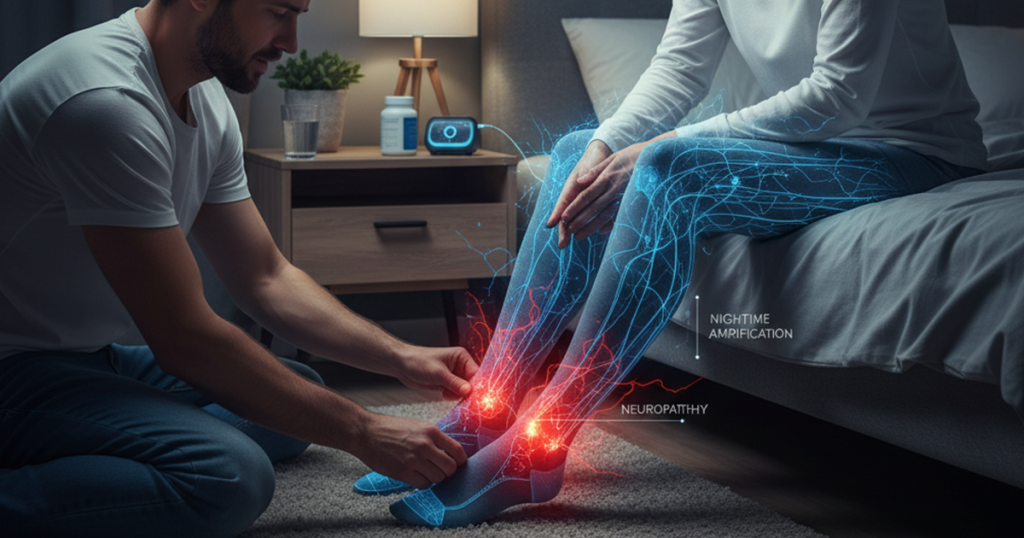
The Mystery of Nighttime Nerve Pain
Many people with neuropathy notice a strange pattern: their symptoms are mild during the day but flare up once they lie down to rest. Burning, tingling, and restless legs seem to peak when they’re trying to sleep.
At Premier Health Institute Los Angeles, we explain this pattern through physiology, not mystery. Nighttime nerve pain happens because your body’s oxygen flow, circulation, and nerve activity shift dramatically during rest. Understanding why this occurs—and correcting it—can bring real, lasting relief.
Why Neuropathy Feels Worse at Night
Several biological changes take place in the body after sunset that can aggravate neuropathy symptoms:
1. Reduced Circulation
When you lie flat or stay still for long periods, blood flow to the legs and feet slows. This means less oxygen reaches the nerves—causing tingling, burning, or throbbing sensations.
2. Lower Oxygen Levels During Sleep
As your breathing rate decreases at night, your body absorbs less oxygen. For healthy individuals, that’s fine—but for those with poor circulation or mild sleep apnea, it can make nerves feel starved.
3. Temperature Changes
At night, your body temperature naturally drops, and cold extremities restrict blood flow even more. Nerves become hypersensitive to these changes, especially in the feet and hands.
4. Reduced Distractions
During the day, your brain focuses on movement, sound, and light. At night, with fewer distractions, your awareness of nerve signals increases—making symptoms seem worse.
5. Inflammatory Rhythms
Research shows that inflammatory markers in the body tend to peak in the evening. Higher inflammation increases nerve sensitivity and amplifies pain perception.
Patient Story: Sleeping Through the Night Again
A 63-year-old Los Angeles patient came to our clinic unable to sleep more than two hours at a time due to severe burning in her feet. After six weeks of oxygen and circulation therapy, her nighttime pain reduced by 80%.
She said, “I used to dread going to bed. Now, I actually sleep through the night without pain waking me up.”
Her story shows that when circulation and oxygen flow improve, nighttime nerve pain begins to fade naturally.
How Oxygen and Circulation Therapy Stop Nighttime Pain
Our Oxygen Therapy saturates the bloodstream with oxygen, giving nerves the energy to repair even during rest. Combined with Circulation Therapy, which improves blood flow to the legs and feet, these treatments help balance nighttime oxygen levels and calm overactive nerve signals.
Together, they create the conditions for deep, restorative sleep.
What These Therapies Do:
- Restore oxygen to oxygen-starved nerves
- Reduce inflammation and pressure
- Improve warmth and blood flow to extremities
- Calm hypersensitive nerve activity
- Help the brain regulate pain perception overnight
Many patients report that after a few sessions, they experience both less pain and better quality sleep.
The Role of the Vagus Nerve and Relaxation
The vagus nerve helps control your body’s relaxation response. When activated, it lowers heart rate, reduces inflammation, and promotes calm breathing. Our Vagus Nerve Activation Therapy supports restful sleep by guiding the body from a stress state into a healing state—perfect for patients whose neuropathy keeps them awake.
Deep breathing, gentle stretching, and relaxation exercises before bed can also help stimulate the vagus nerve and prepare your body for repair.
Natural Strategies to Reduce Nighttime Neuropathy
- Elevate your feet slightly while sleeping to improve blood flow.
- Warm your feet with socks or a heating pad to promote circulation.
- Stretch before bed to release tension and stimulate oxygen delivery.
- Avoid alcohol or heavy meals close to bedtime—they impair circulation.
- Practice deep breathing to raise oxygen levels before sleep.
- Stay hydrated—even mild dehydration thickens the blood and limits flow.
These simple adjustments work best when paired with consistent in-office therapies.
Why Pain Relief Medications Don’t Fix the Problem
Painkillers or nerve medications may dull nighttime discomfort temporarily, but they don’t address the underlying issue—oxygen starvation and impaired circulation. Once those systems are restored, the pain fades naturally without dependency or side effects.
That’s why our treatments focus on rebuilding nerve health from the ground up rather than masking symptoms.
Frequently Asked Questions
Why do my feet burn more at night than during the day?
Because circulation and oxygen delivery naturally slow while you rest, nerves become more sensitive to oxygen loss and temperature changes.
Can improving circulation really reduce nighttime pain?
Yes. When blood flow and oxygen delivery improve, nerve sensitivity decreases, making it easier to sleep comfortably.
How long does it take to notice improvement?
Most patients see changes within two to four weeks of consistent oxygen and circulation therapy.
The Takeaway
Nighttime nerve pain isn’t random—it’s the body’s response to decreased oxygen, circulation, and temperature regulation. The good news is that it can be reversed.
At Premier Health Institute Los Angeles, we help patients sleep better and live pain-free through advanced oxygen therapy, circulation enhancement, and vagus nerve activation—restoring calm, balance, and comfort, even after dark.